Route du Rhum trimaran Elvest capsizes north of the Azores
The skipper waited on his upturned Ocean Fifty for about a day and a half before the class rescue vessel Merida reached him; the trimaran was righted at sea.
What happened.
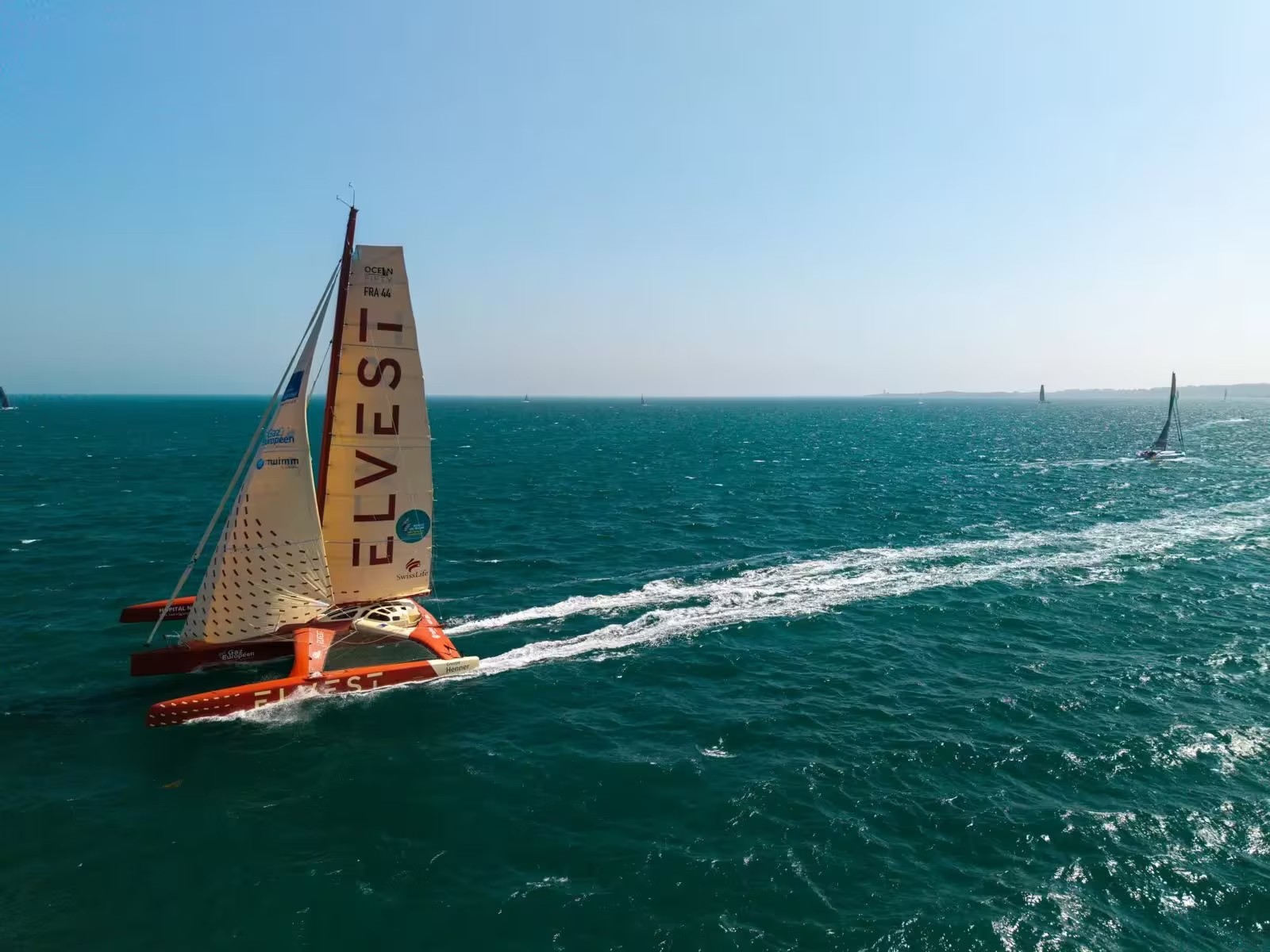
Three days into the 2026 Route du Rhum, the Ocean Fifty trimaran Elvest capsized about 464 miles north of the Azores. The skipper was unhurt and stayed in the upturned boat, in contact with his race office. Merchant ships stood by, and the class rescue vessel Merida picked him up more than a day later.
The Ocean Fifty trimaran Elvest was being sailed single-handed in the 2026 Route du Rhum from Saint-Malo to Guadeloupe when she capsized at 21:05 UTC on Tuesday 3 November, about 464 nautical miles north of Sao Miguel. A strong depression had hit the fleet, and several other boats capsized or retired in the same days. The skipper was unhurt; he sheltered in the central hull of the upturned trimaran and kept in touch with the race direction and his team. The Portuguese Navy's rescue centre in Ponta Delgada monitored the situation, and on 4 November two merchant ships went to the area to stand by. At 06:15 UTC on 5 November, about 33 hours after the capsize, the class rescue vessel Merida picked him up. Her crew then righted the trimaran at sea within hours and towed her to the Azores, to Faial. The same boat had already capsized a year earlier in the Transat Cafe L'Or. The cause of this capsize has not been published.
What it teaches.
- 1After a capsize, stay with the boat.
- 2Rescue far offshore can take more than a day. Plan to wait: water, warmth, food and a charged beacon and phone you can reach from the upturned hull.
- 3Keep talking to whoever can help. Regular contact lets the rescue centre send ships to stand by while help is on its way.
These lessons are SeaWise's reading of the published reports and news coverage, written so other sailors can learn. They are not official findings on cause or fault, and they don't judge the people involved.
Procedures involved.
Learn from the next one.
One free email a week from the Fleet's Logbook: the new incidents and what they teach. Unsubscribe anytime.
Where this comes from.
SeaWise indexes and links to primary sources; it does not host their reports or media. Crew are referred to by role unless documented consent is on file.
More like this.
Share your story.
SeaWise records are richer when survivors and crewmates contribute what they remember. Submissions are private by default — your name and contact never appear on the public record.
Submit a story