A French yacht loses power before dawn and is wrecked on the rocks at the entrance to Órzola harbour, Lanzarote
Four crew took to the liferaft and the skipper reached the shore on his own. All five were treated for hypothermia and grazes.
What happened.
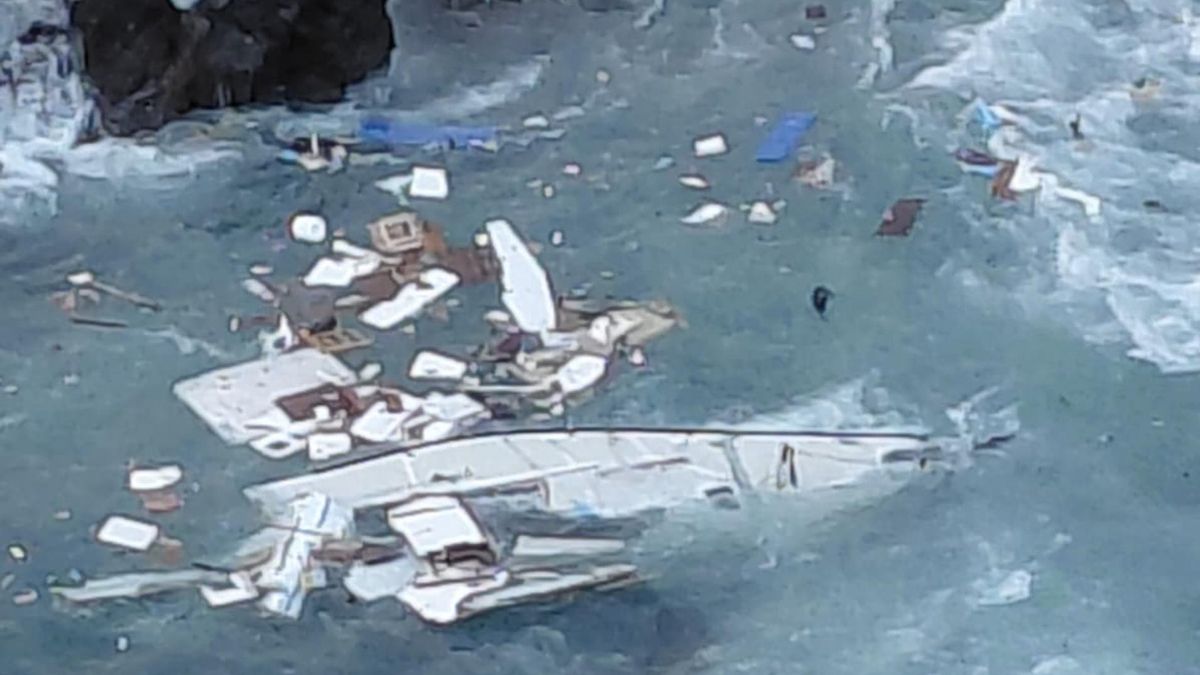
Before dawn on 25 October 2026 a French sailing yacht with five aboard lost power off Órzola, in the north of Lanzarote, and went onto the rocks at the harbour entrance. Four crew got into the liferaft and the skipper reached the shore on his own. All five were treated for hypothermia and grazes. The yacht broke up.
At about 05:45 on Sunday 25 October 2026 the Canary Islands emergency services were alerted to a sailing yacht unable to manoeuvre just off the pier at Órzola, on Lanzarote's north coast. The yacht, with a crew of five from France, had reportedly lost engine power. She went onto the rocks at the harbour entrance and lay over on her side against the harbour defences, where the waves kept driving her against the rocks until the hull broke apart. Four of the crew abandoned her in the liferaft; the skipper reached the rocky shore by himself. It is not clear whether the four left before or after she first struck. Salvamento Marítimo's Salvamar Acrux, a rescue helicopter and the Lanzarote fire brigade responded. Firefighters brought the four in the liferaft ashore with a water-rescue vehicle, and the Salvamar recovered the empty raft. Paramedics at the harbour treated all five for hypothermia and grazes to their hands and knees, and they were taken to hospital in Arrecife; none was seriously hurt. The authorities checked the wreck for fuel leaks. Local officials pointed to earlier similar incidents at the same harbour entrance.
What it teaches.
- 1Near rocks, have a second way to move or hold the boat ready before you need it: a sail that can be hoisted in seconds and an anchor ready to let go.
- 2When the boat is being driven onto rocks, decide early to leave by liferaft or for the shore. Waiting aboard while she breaks up uses time you may not have.
- 3Keep warm clothing and gloves to hand at night. Even in the Canaries, all five crew were treated for hypothermia and grazes from the rocks.
- 4Before approaching a harbour at night, read the pilot notes for hazards at the entrance, and consider standing off until daylight.
These lessons are SeaWise's reading of the published reports and news coverage, written so other sailors can learn. They are not official findings on cause or fault, and they don't judge the people involved.
Procedures involved.
Learn from the next one.
One free email a week from the Fleet's Logbook: the new incidents and what they teach. Unsubscribe anytime.
Where this comes from.
SeaWise indexes and links to primary sources; it does not host their reports or media. Crew are referred to by role unless documented consent is on file.
More like this.
Share your story.
SeaWise records are richer when survivors and crewmates contribute what they remember. Submissions are private by default — your name and contact never appear on the public record.
Submit a story